
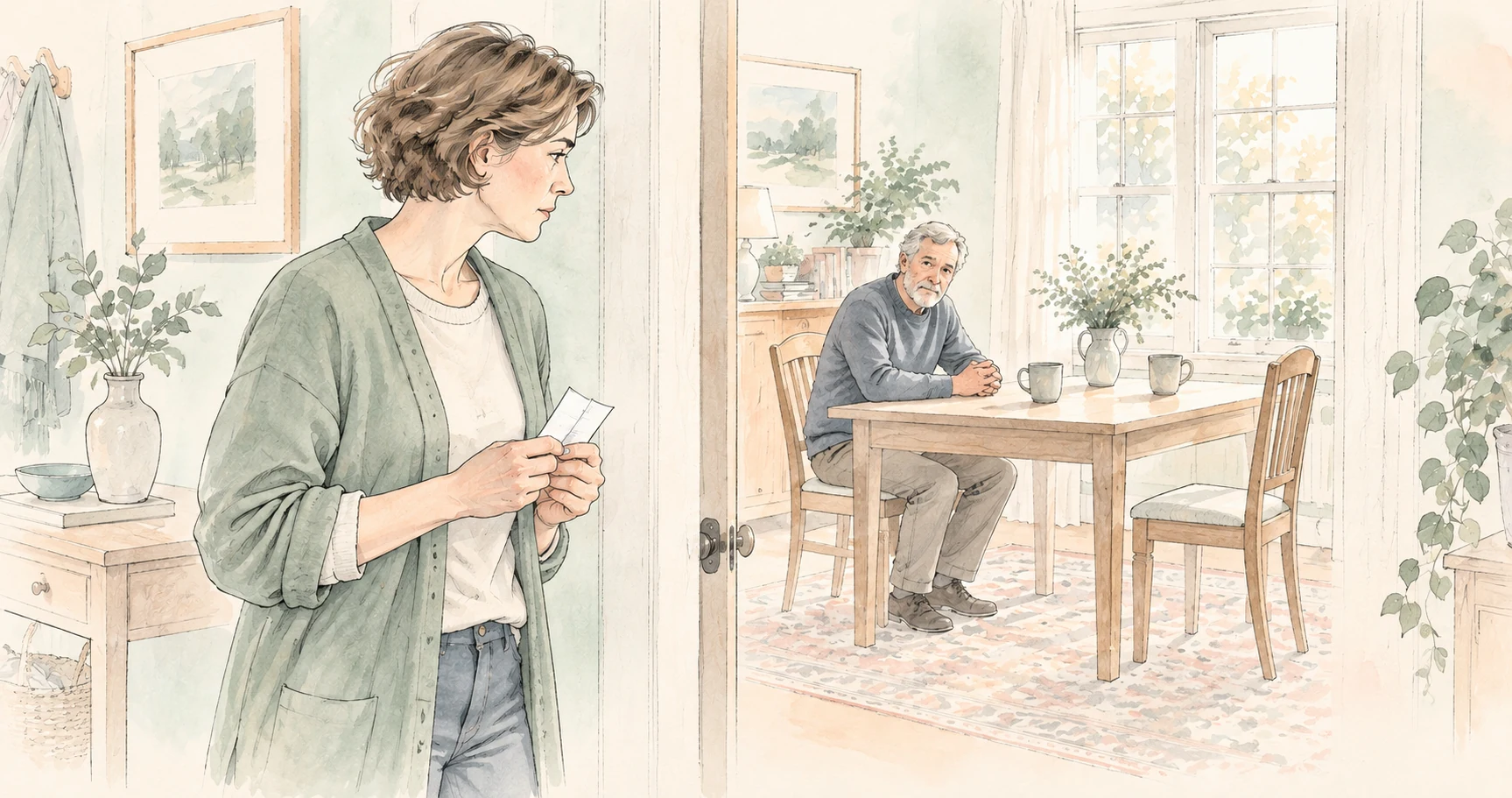
Before a difficult conversation, your mind may rehearse both sides until you feel as if the argument has already happened. Bring the preparation back to what you can actually say and ask.
Write the purpose in one sentence
Choose a concrete aim: request a clearer deadline, explain why a comment hurt, or agree on a household responsibility. “Make them understand everything” is harder to act on than “Ask for one uninterrupted conversation about this.”
Draft an opening that describes an observation and a request. “The plan changed after I arranged childcare. Can we agree on when changes need to be confirmed?” gives the other person something specific to respond to.
Leave space for an answer
Choose a question you genuinely need answered. Decide what you will do if the conversation becomes heated: take a pause, move to another time, or end it. A calm voice does not obligate you to stay in a conversation that feels unsafe.
If the topic involves intimidation or fear for your safety, prioritize support and a safe plan over confronting someone alone. A session is not a substitute for that planning.
Prepare to speak, not to control
For a brief reset, keep your eyes open, feel the support of your chair, and release the need to predict every reply. You can be clear about your concern without having a script for all possible outcomes.
Tell Mooder who the conversation is with, what matters, and the boundary you want to remember. A personalized Calm session can bring you back to those details. After listening, read your opening once and approach the conversation with room to hear what is actually said.
MAKE IT PERSONAL
Your personalized Calm prompt
Replace the brackets with your situation. Edit the words until they sound like you, then copy your prompt.
Mooder is coming soon. You can personalize and save your prompt now.
How to describe your momentWant a session built around this moment? See how Mooder turns your words into personal Calm or Boost audio.
Practical guidance from Mooder. Health information is linked to its sources; these guides are not a diagnosis or a treatment plan.