
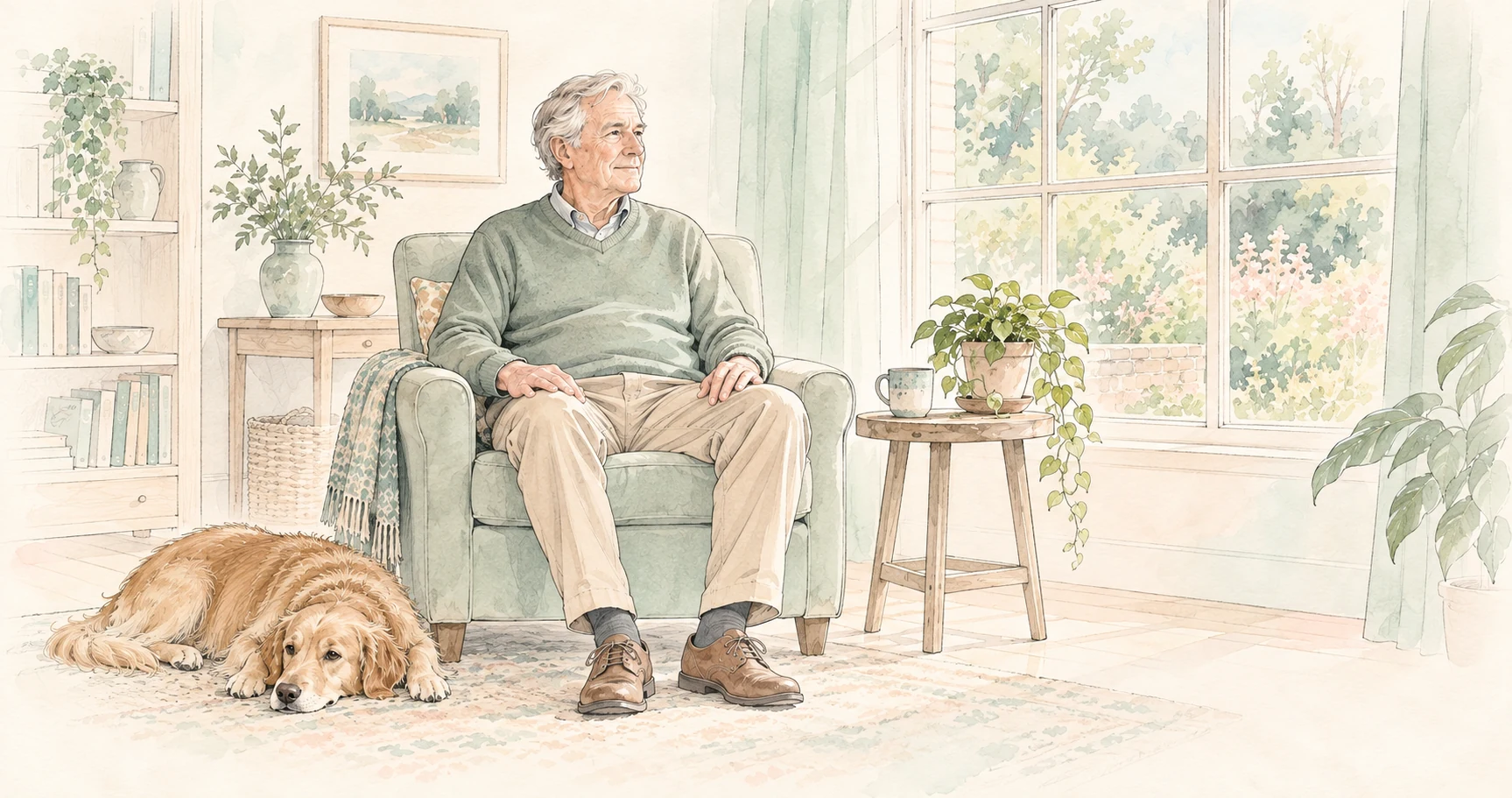
Your first meditation does not need a special room, an empty mind, or a new identity as a person who meditates. Begin with a comfortable pause and one place to return your attention.
Choose an anchor you do not have to manufacture
Sit somewhere safe and notice the support of the chair or an ordinary sound. Keep your eyes open if that suits you. You can use natural breathing as an anchor, but you do not have to change its speed or depth.
When your attention wanders, notice that it wandered and return. You do not need to count every distraction or decide whether the practice is working during each second.
Start shorter than your ambition
Choose one or a few minutes. A brief, usable experience gives you something to assess: Was the guidance clear? Did the anchor feel comfortable? Did you prefer more words or more silence?
If inward attention feels distressing, stop or choose an external anchor. Meditation is not comfortable for everyone in every setting. The NCCIH overview discusses the evidence and possible adverse experiences; it should not be treated as a cure-all.
Personalize the reason you are pausing
Instead of requesting “beginner meditation” alone, name the moment: before work, after a tense conversation, or during a quiet break. Ask Mooder for plain language and no assumptions that you already know meditation terminology.
After listening, decide whether this approach fits you. You are allowed to adjust the anchor, shorten the session, or prefer another way of taking a break. Beginning means finding an experience you can use in your life, not completing a standard sequence to someone else's specifications.
MAKE IT PERSONAL
Your personalized Calm prompt
Replace the brackets with your situation. Edit the words until they sound like you, then copy your prompt.
Mooder is coming soon. You can personalize and save your prompt now.
How to describe your momentWant a session built around this moment? See how Mooder turns your words into personal Calm or Boost audio.
Practical guidance from Mooder. Health information is linked to its sources; these guides are not a diagnosis or a treatment plan.