
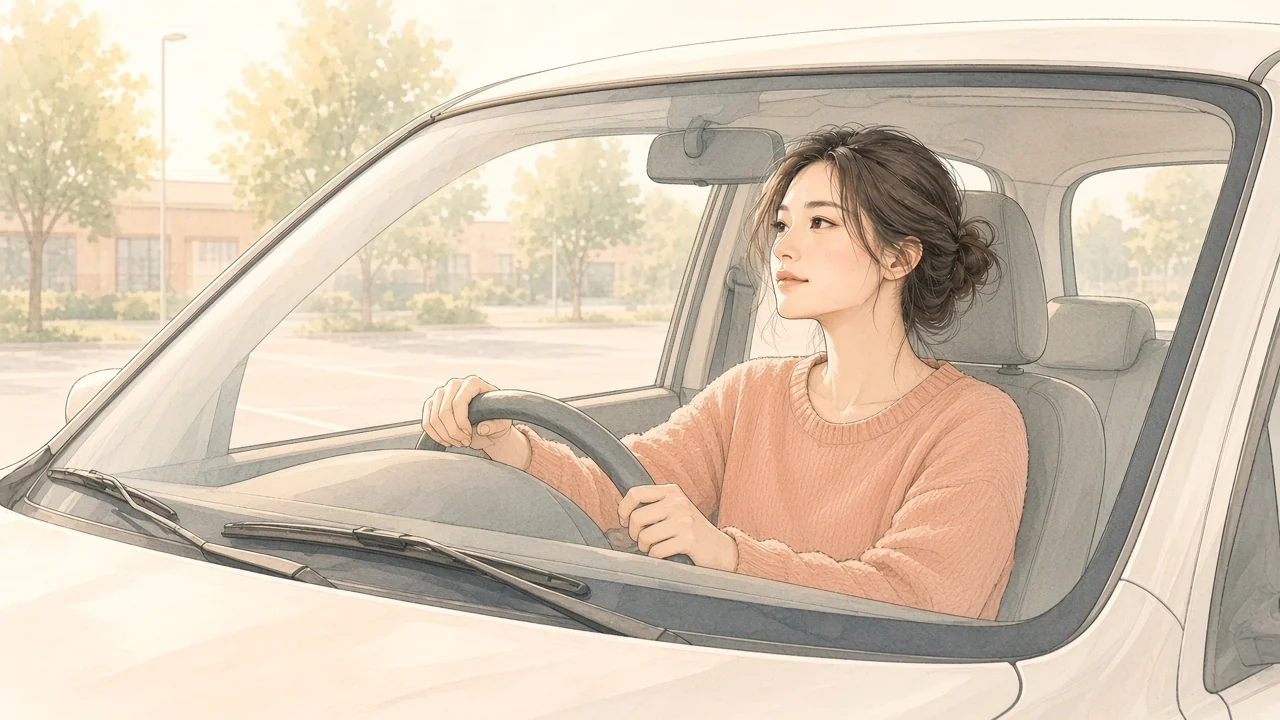
If you are wondering how to calm down before a driving test, it helps to stop treating "the test" as one huge event. It is really three smaller moments: the night before, the morning, and the last few minutes in the car before the examiner gets in. Each one has a different job, and each needs only a small plan.
You do not need to feel completely calm to drive well. Many people pass while nervous. The aim is to be steady enough to notice the road, follow instructions, and keep going after a small mistake.
The night before: prepare, then stop
Decide what "enough preparation" means tonight and stop when you reach it. A short list works well:
- documents and licence ready, in one place;
- the route to the test centre and when you need to leave;
- one or two manoeuvres you will picture once, calmly, from start to finish.
Then put the list away. Rewatching driving videos at midnight usually adds worry rather than skill. If your mind keeps rehearsing, write the worry down with a time to look at it ("check mirrors routine, 8 a.m.") and return to winding down. For more ideas, see what to do when you can't sleep the night before a big day.
A poor night's sleep is frustrating, but it does not decide the result. Lying down and resting still helps.
The morning: keep it ordinary
Eat something you normally eat, and drink some water. Leave with extra time so traffic does not become a second test. If you have a lesson or a short practice drive beforehand, keep it simple: smooth starts and stops, mirror checks, one manoeuvre. This is not the moment to learn anything new.
Notice what your nerves are telling you. Butterflies, a faster heartbeat, and sweaty hands are common before a test. Some people find it helps to name the feeling as energy rather than danger: "I'm alert because this matters."
The last minutes: one breath, one routine, one sentence
In the waiting area or the parked car, with the engine off, try this:
- One slow breath out. Let it be longer than your breath in. Drop your shoulders and loosen your grip.
- One familiar routine. Run through the checks you do every time you get in the car: seat, mirrors, seatbelt. Familiar actions are a good anchor.
- One sentence for yourself. For example: "I've done this drive many times. Mirrors, signal, steady speed."
If you like having a short pep talk to listen to, play it here, before the test starts and before you drive, never while the car is moving. Then put your phone away and follow the test centre's rules about phones.
During the test: if you make a mistake, keep driving
The fear of one mistake often causes more trouble than the mistake itself. Guidance from the UK's driving test service says you can carry on if you make a mistake and that it might not affect your result if it is not serious. It also notes that the examiner will not give a fault for taking a wrong turning. Rules differ by country and state, so check your own test centre's guidance, but the principle is useful anywhere: your job is the next junction, not the last one.
If you notice an error, say a short reset line in your head, such as "Next hazard," and bring your attention back to the road ahead. If you need the examiner to repeat a direction, ask. That is part of driving safely.
After the test
Whatever the result, take a few minutes before you replay every moment. If you pass, enjoy it. If you do not, write down the feedback while it is fresh, then leave it until tomorrow. A test is a snapshot of one drive, not a verdict on you. If one mistake keeps replaying, this guide on what to do after a mistake can help you separate the facts from the story.
A short Boost before you go in
Mooder's Boost sessions are short, personalized audio pep talks. You describe the moment: your test time, the manoeuvre you worry about, what you have already practised. The session speaks to that rather than to a generic driver. Listen in the waiting area or with the engine off, not while driving. The Mooder app is coming soon; you can write and save your prompt now.
Questions you may have
How can I calm my nerves right before a driving test?
With the engine off, take one slow breath out, run through your usual checks such as seat, mirrors, and seatbelt, and say one short sentence to yourself. Familiar routines tend to be steadier anchors than trying to stop the nerves completely.
Is it normal to be very nervous before a driving test?
Yes. Being assessed while doing something that needs full attention is stressful for many people, and many pass while nervous. If anxiety about driving stops you from driving at all, it may be worth talking to a professional.
What happens if I make a mistake during my driving test?
Rules vary by country and state. In Great Britain, official guidance says you can carry on after a mistake and it might not affect your result if it is not serious. Wherever you are, focus on the road ahead rather than the error behind you.
Can I listen to a pep talk in the car before my test?
Only while parked with the engine off, and before the test begins. Do not listen to audio while driving, and follow your test centre's rules about phones.
MAKE IT PERSONAL
Your personalized Boost prompt
Replace the brackets with your situation. Edit the words until they sound like you, then copy your prompt.
Mooder is coming soon. You can personalize and save your prompt now.
How to describe your momentSources and further reading
Want a session built around this moment? See how Mooder turns your words into personal Calm or Boost audio.
Practical guidance from Mooder. Health information is linked to its sources; these guides are not a diagnosis or a treatment plan.