
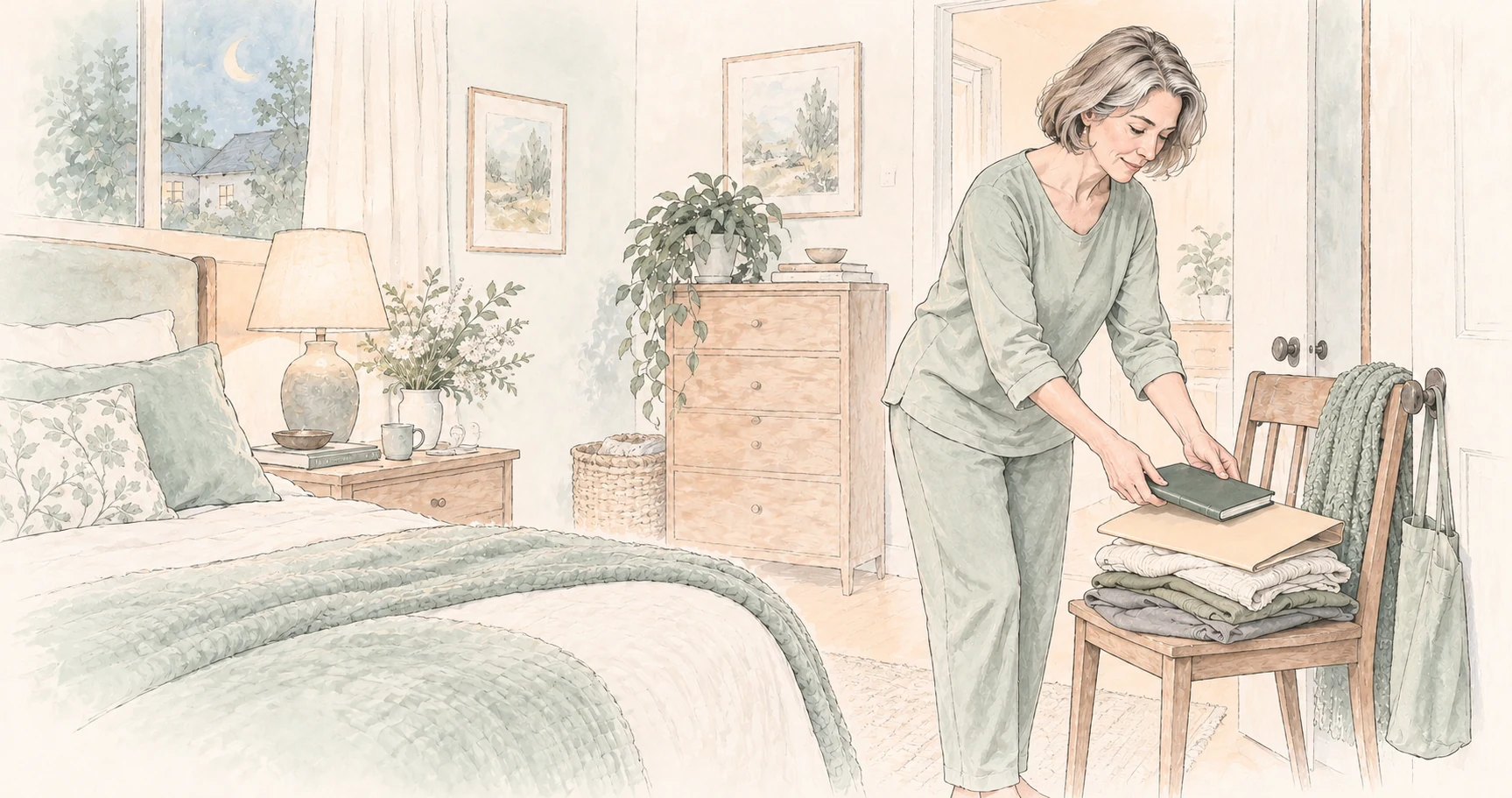
The night before an interview, trip, or presentation can feel like extra time to prepare. But opening your notes again may keep the event at the center of the evening. Start by deciding what preparation is enough for tonight.
Complete the practical handoff
Check the essentials once: where you need to be, what you need to bring, and when you will leave. Put the items together. Write the first morning action somewhere visible so you do not have to keep remembering it in bed.
For a presentation, that might mean testing the file and placing the laptop charger in your bag. It does not need to mean rehearsing every question a client could ask.
Stop testing whether you feel ready
Readiness and nervousness can coexist. Choose a sentence such as “The next useful preparation happens in the morning.” When you catch yourself checking the time or reviewing the same slide, return to that decision.
A predictable wind-down and a sleep-friendly room can support your usual routine. The NHLBI sleep guidance offers broader information about sleep habits and treatment when difficulties persist.
Request rest without a deadline
For an audio session, specify that you do not want countdowns or instructions to fall asleep quickly. Quiet company may be more useful than language that turns the remaining hours into a performance score.
Tell Mooder what tomorrow holds and what is already handled. “My interview is at ten, my notes are ready, and I want to stop mentally rehearsing” is a workable context. If listening makes you more alert, stop. Your bedtime routine can remain simple, and one restless night does not need to become a story about how tomorrow will go.
MAKE IT PERSONAL
Your personalized Calm prompt
Replace the brackets with your situation. Edit the words until they sound like you, then copy your prompt.
Mooder is coming soon. You can personalize and save your prompt now.
How to describe your momentWant a session built around this moment? See how Mooder turns your words into personal Calm or Boost audio.
Practical guidance from Mooder. Health information is linked to its sources; these guides are not a diagnosis or a treatment plan.