
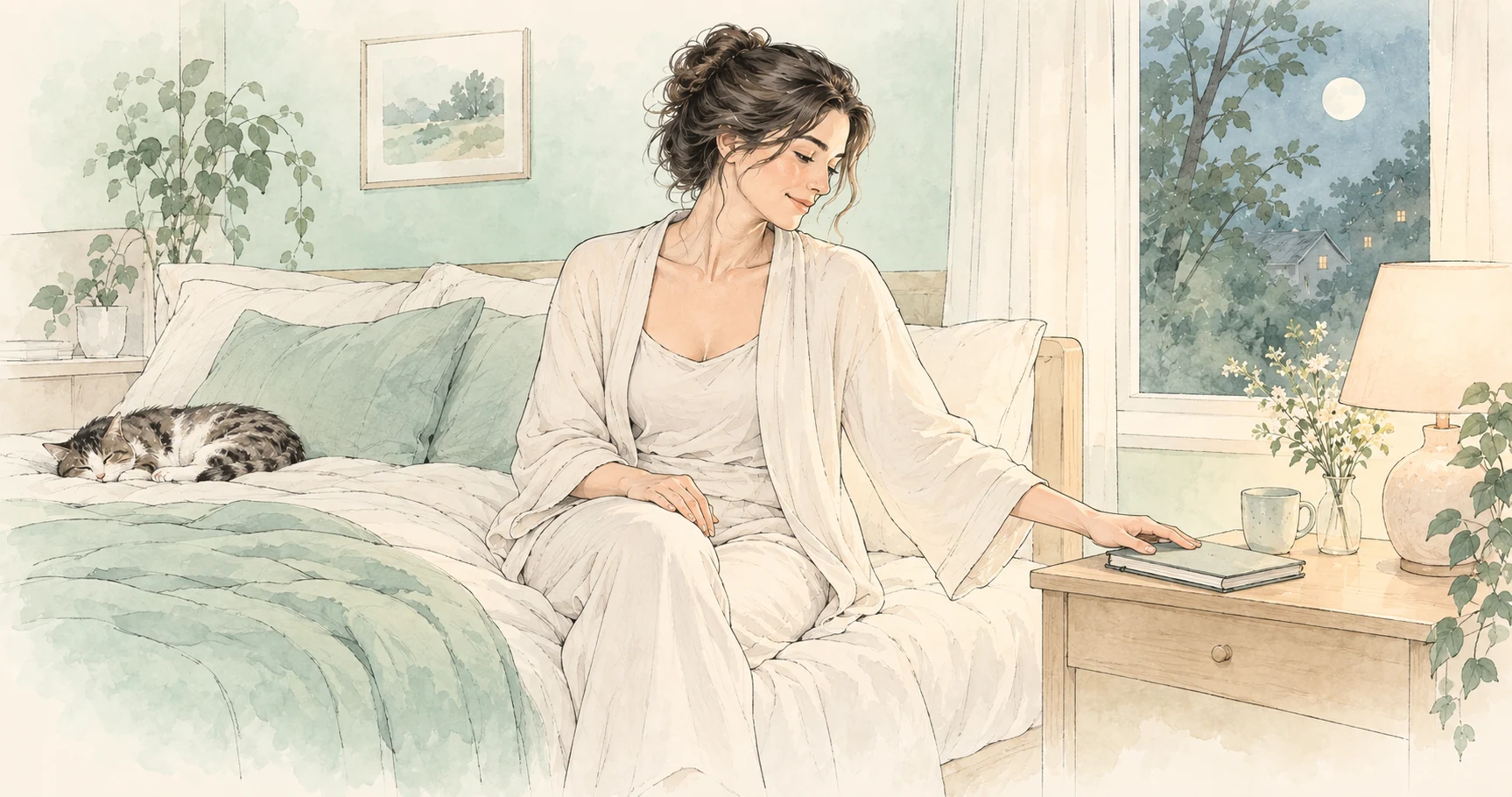
At bedtime, your mind may review the day as if it were a report you need to correct before morning. Reflection can be useful, but a nightly prosecution of yourself rarely has a clear stopping point.
Take one lesson and leave the rest
If something needs repair, write down the specific action for tomorrow. Keep it proportionate: apologize for an interruption, ask for clarification, or revise a mistake. The next step does not have to include a verdict about your character.
If there is no action, notice that the thought may be a judgment rather than a plan. “I should have been better at everything” does not give tomorrow a usable instruction.
Use language you can believe
You do not need to jump from criticism to praise. Try a neutral statement: “Today was imperfect, and I can rest before dealing with tomorrow.” Believable wording may be easier to use than affirmations that feel unrelated to the day you had.
Choose a comfortable anchor, such as the pillow or a quiet sound. If replaying returns, come back to the written plan rather than reopening the entire review.
Make the session kind without rewriting events
Tell Mooder what kind of criticism is repeating and ask for realistic language. You can request no praise, no productivity advice, and more silence.
After listening, return to your bedtime routine. If self-criticism is persistent, intense, or interfering with daily life, consider professional support. A quiet session can accompany one evening; it should not become the only place you address a pattern that needs broader care. You are allowed to end today's review without making the day sound perfect.
MAKE IT PERSONAL
Your personalized Calm prompt
Replace the brackets with your situation. Edit the words until they sound like you, then copy your prompt.
Mooder is coming soon. You can personalize and save your prompt now.
How to describe your momentWant a session built around this moment? See how Mooder turns your words into personal Calm or Boost audio.
Practical guidance from Mooder. Health information is linked to its sources; these guides are not a diagnosis or a treatment plan.