
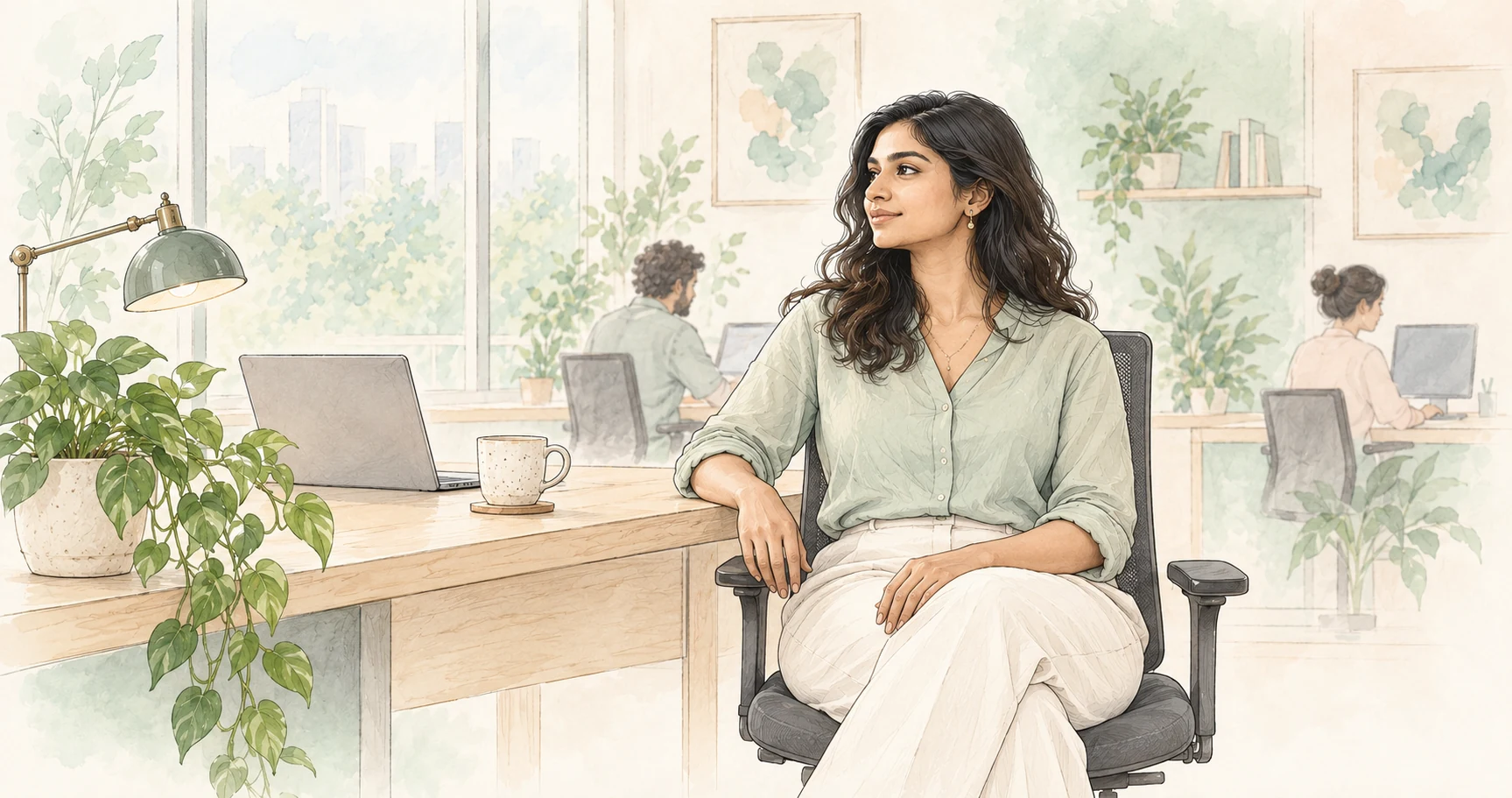
You may need a brief pause without closing your eyes, leaving the office, or drawing attention. An eyes-open exercise can use ordinary details already in front of you.
Pick three neutral details
Notice the outline of the desk, a color in the room, and where the chair supports you. You do not need to scan for signs of danger or find an especially soothing object. Ordinary is enough.
Let your hands rest if you can. Keep breathing naturally. If any focus feels uncomfortable, choose a different detail or stop. The exercise is optional, and you can remain aware of people and sounds around you.
Give the pause a modest job
Perhaps you want to settle after an email or stop carrying one conversation into another. Name that transition rather than asking for total calm. A minute at your desk cannot address every source of workplace stress.
If the environment itself is unsafe or persistently harmful, practical support matters more than learning to sit quietly within it.
Tailor the guidance to the setting
Tell Mooder that you are in a shared office and want discreet, eyes-open instructions. Ask for no dramatic gestures, counting aloud, or detailed imagery. You can also request that the session end by pointing you toward one next task.
After listening, return to that task or take a real break if needed. The useful outcome may be a slight change in how you enter the next moment, not an obvious transformation. A personal Calm session can respect the setting you are in and the level of attention you still need to keep available.
MAKE IT PERSONAL
Your personalized Calm prompt
Replace the brackets with your situation. Edit the words until they sound like you, then copy your prompt.
Mooder is coming soon. You can personalize and save your prompt now.
How to describe your momentWant a session built around this moment? See how Mooder turns your words into personal Calm or Boost audio.
Practical guidance from Mooder. Health information is linked to its sources; these guides are not a diagnosis or a treatment plan.